
📞 Call 01604 913229 — Free Estimate
Roof Repair Signs Northampton Homeowners Should Not Ignore
Roof repair is almost always cheaper than roof replacement — but only if the problem is identified and dealt with before it has time to spread. The difficulty is that most roofing problems are not visible from inside the house until they have been developing for months or years. By the time a stain appears on the bedroom ceiling, the roof has typically been allowing water in for a significant period, and the damage extends well beyond what the ceiling stain suggests. Knowing what to look for — and when to call a roofer — saves Northampton homeowners significant money and disruption.
Slipped or Missing Tiles and Slates
A slipped tile or slate is one of the most visible signs that a roof needs attention, and also one of the easiest for a homeowner to spot from the ground. On a concrete tile roof, slippage usually means that the nibs — the projections on the back of the tile that hook over the batten — have broken, or that the tile has cracked and a section has fallen away. On a natural slate roof, slippage typically means that the nail fixing has corroded through. In both cases, the gap left by the missing tile exposes the felt and batten beneath to direct rainfall.
A single slipped tile is a straightforward repair. Left unattended through a Northamptonshire winter, the exposed felt deteriorates quickly under repeated freeze-thaw cycling and direct rain, and what was a one-tile repair can become a section of felt replacement within a season. If you can see a gap in your roof covering from the pavement, call a roofer.
Ridge and Hip Tile Problems
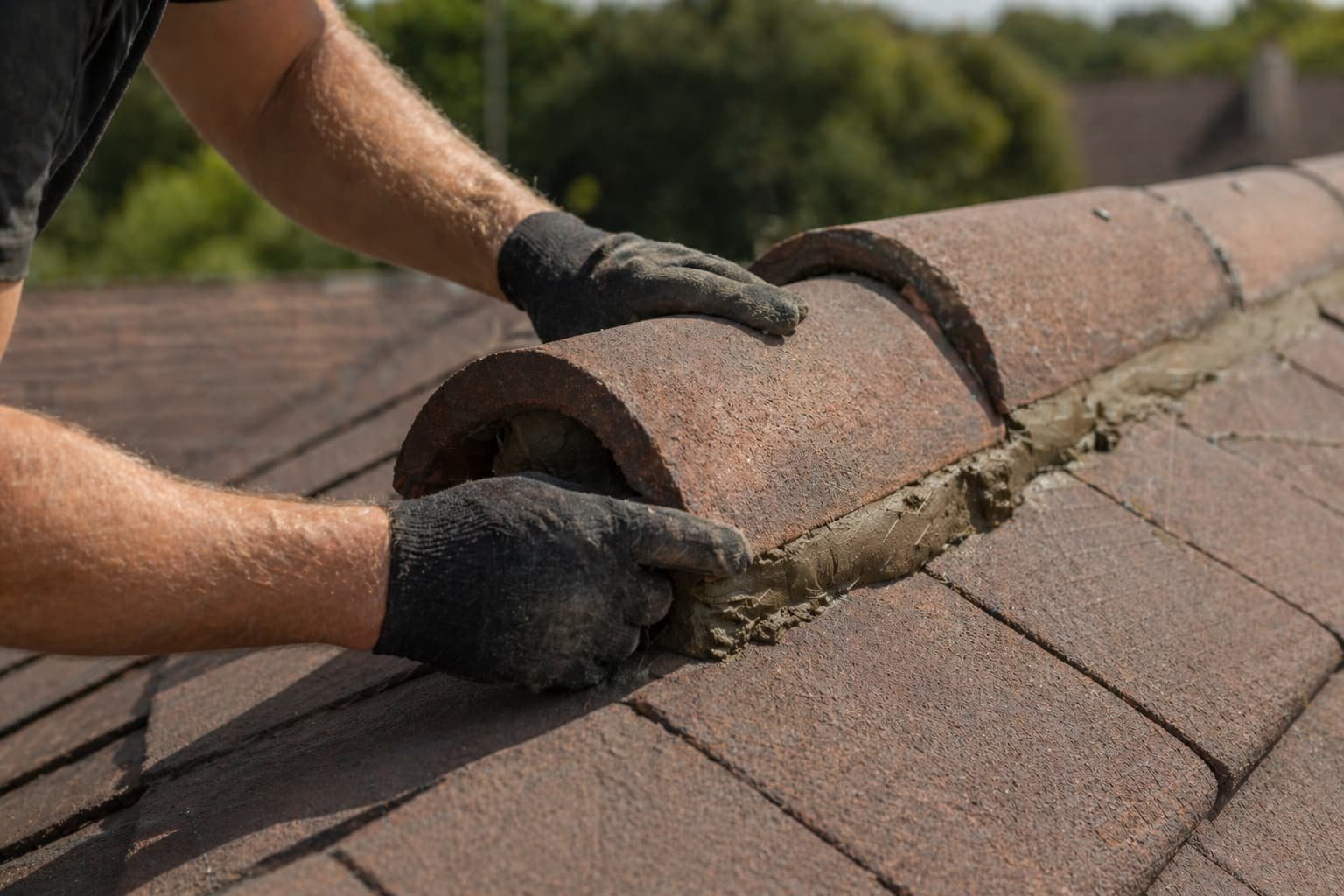
Ridge tiles sit at the apex of the roof and are bedded in mortar. On properties built before the 1980s across Northampton — the post-war semis in Duston, Kingsthorpe, Weston Favell, and Abington, and the inter-war stock across the Headlands area — the original lime mortar pointing beneath the ridge tiles has fully deteriorated on the vast majority of roofs. The tiles themselves may look intact from the street but are frequently rocking or loose when inspected at close range.
A rocking ridge tile allows wind-driven rain to enter beneath it during every period of bad weather. The water tracks down the inside of the roof and into the insulation and ceiling below. In severe cases, ridge tiles that are no longer adequately bedded can be lifted and displaced by wind, creating a sudden and significant opening at the roof apex. Ridge re-bedding and repointing is a relatively low-cost repair when done proactively — it becomes significantly more expensive when water ingress has damaged the timber and insulation beneath.
Leaks and Water Stains Inside the House
A water stain on a ceiling or a damp patch on a wall near the roofline is a clear sign that water is entering the roof space. The difficulty with internal water stains is that they rarely appear directly below the point of entry — water tracks along rafters, battens, and ceiling joists before finding a low point and dripping through. A stain above the bedroom window may originate from a failed flashing at the chimney stack three metres away. Do not attempt to identify the source from inside — a roofer needs to inspect the roof surface and the roof space to trace the leak accurately.
Failed Flashings Around Chimneys and Abutments
Lead flashings seal the junction between the roof covering and vertical surfaces — chimney stacks, parapet walls, and the walls of extensions and dormers. On properties across Northampton built before the 1980s, the original lead flashings have typically never been replaced and are now at or past the end of their reliable service life. Aged lead develops hairline cracks that are invisible from the ground but allow consistent water entry. If a property has a chimney stack and has not had its flashings replaced in living memory, they are worth having inspected — failed chimney flashings are one of the most common sources of roof leaks we attend across the area.
Moss and Vegetation Growth
Moss on a roof is not itself a structural problem, but it is an indicator that the roof surface is retaining moisture — and persistent moisture retention accelerates the deterioration of the tiles and the mortar beneath the ridges. Heavy moss growth also blocks gutters when it washes off during rainfall, causing overflow that can damage fascias, soffits, and the wall below the gutterline. Moss treatment and removal is a maintenance task rather than a repair, but a roof with significant moss coverage is worth having inspected to check the condition of the tiles and pointing beneath.
When to Repair and When to Replace
The decision between repair and replacement comes down to the extent of the damage and the overall condition of the roof. If problems are isolated and the rest of the roof is sound, repair is the right choice. If the same roof has been patched repeatedly, if there are simultaneous failures in multiple locations, or if the felt beneath is visibly deteriorating across a wide area, a full replacement is likely to be more cost-effective over a five-year period than continued patchwork. We give you an honest recommendation at the estimate visit. For guidance on roofing standards and what a professional repair should include, visit nfrc.co.uk.
Free Roof Repair Estimates Across Northampton
We carry out roof repairs across Northampton, Wellingborough, Kettering, Daventry, Towcester, and surrounding villages. Free estimates, fixed prices, no payment until the work is complete. Call 01604 913229 or use the estimate form to arrange a visit.